
Tuesday, May 31, 2016


Monday, May 23, 2016
Monday, May 16, 2016
Fun Election Game
Let's say there are 2 candidates for president
Candidate 1 is pro-abortion, pro-embryonic stem cell research, pro-partial birth abortion and pro-gay "marriage"
Candidate 2 - claims to be against all those things above
Assuming that you would never vote for candidate 1, what would Candidate 2 have to say or do in order for you NOT to vote for either candidate?
It is a fascinating question. Feel free to leave a list of things that you would consider to disqualifiers for candidate 2
Candidate 1 is pro-abortion, pro-embryonic stem cell research, pro-partial birth abortion and pro-gay "marriage"
Candidate 2 - claims to be against all those things above
Assuming that you would never vote for candidate 1, what would Candidate 2 have to say or do in order for you NOT to vote for either candidate?
It is a fascinating question. Feel free to leave a list of things that you would consider to disqualifiers for candidate 2
Awesome talk at my parish on sacred music
This was given by Mr. Edward Atkinson, our director of sacred music
Sunday, May 15, 2016
Tuesday, May 10, 2016
Monday, May 9, 2016
On the Catholic Option to Not Vote
Yes, the Catechism says:

But the Catechism is not meant to be exhaustive of options in every situation, and so the Bishops of the US, in expanding on the particular issue of voting, note in paragraph 36 of "Faithful Citizenship":
"When all candidates hold a position that promotes an intrinsically evil act, the conscientious voter faces a dilemma. The voter may decide to take the extraordinary step of not voting for any candidate"
This actually is perfectly in line with Catholic teaching because one can easily imagine a scenario where both candidates are heinous options. Imagine a scenario (just for illustrative purposes) where Stalin and Hitler are the two names on the ballot
The Church would never COMPEL us to pick one in that instance, and if there is an instance where it is possible to not vote, then that proves that the Bishops are correct - it is POSSIBLE to not vote
The only question left to discern, then, is whether or not THIS PARTICULAR ELECTION is one in which a person feels they can vote for one of the candidates or not
The thing about discernment, though, is that you can't do it for someone else and no one can do it for you. I hear a lot of people saying "A Catholic has to vote for candidate ________ in order to stop candidate ___________, you can't sit this election out or it is a sin."
That is patently untrue. Not voting is NOT NECESSARILY a sin, and each person has to pray and decide, in each election, whether they can in good conscience vote for ANY of the candidates.
2) Another point here: even if you disagree with the Bishop's above, and believe that the Catechism is good but Faithful Citizenship is bad..."exercising one's right to vote" (as the Catechism says) is not the same as "You must vote for one of the two major political party candidates". I can follow the Catechism and vote for my Dad for President (which I may do)

But the Catechism is not meant to be exhaustive of options in every situation, and so the Bishops of the US, in expanding on the particular issue of voting, note in paragraph 36 of "Faithful Citizenship":
"When all candidates hold a position that promotes an intrinsically evil act, the conscientious voter faces a dilemma. The voter may decide to take the extraordinary step of not voting for any candidate"
This actually is perfectly in line with Catholic teaching because one can easily imagine a scenario where both candidates are heinous options. Imagine a scenario (just for illustrative purposes) where Stalin and Hitler are the two names on the ballot
The Church would never COMPEL us to pick one in that instance, and if there is an instance where it is possible to not vote, then that proves that the Bishops are correct - it is POSSIBLE to not vote
The only question left to discern, then, is whether or not THIS PARTICULAR ELECTION is one in which a person feels they can vote for one of the candidates or not
The thing about discernment, though, is that you can't do it for someone else and no one can do it for you. I hear a lot of people saying "A Catholic has to vote for candidate ________ in order to stop candidate ___________, you can't sit this election out or it is a sin."
That is patently untrue. Not voting is NOT NECESSARILY a sin, and each person has to pray and decide, in each election, whether they can in good conscience vote for ANY of the candidates.
2) Another point here: even if you disagree with the Bishop's above, and believe that the Catechism is good but Faithful Citizenship is bad..."exercising one's right to vote" (as the Catechism says) is not the same as "You must vote for one of the two major political party candidates". I can follow the Catechism and vote for my Dad for President (which I may do)
Trump - the national version of Indiana's Richard Mourdock
In the Tea Party surge in 2012, Richard Mourdock upset long time Indiana senator Richard Lugar in the Republican primary. Lugar had served admirably in a long and distinguished career, but Mourdock won over voters with promises to
"shake up Washington as an outsider"
"take on the Republican establishment"
etc. etc.
Mourdock won the primary and then got DESTROYED in the general election by Democratic moderate Joe Donnelly. (Donnelly won handily in a race that was supposed to be a slam dunk for the Republicans)
It was Mourdock's mouth that got him into trouble, as he failed miserably in debates, and, most disastrously, at one point implied that rape could be intended by God.
Guess what, Republicans in Indiana learned a hard lesson, but they won't nominate someone like Mourdock for a long, long time. They learned that electability ACTUALLY MATTERS, and that you can't put someone up for general election just because they promise to go burn the establishment down. Any crazy person can promise to go burn everything down.
And I think the same thing will happen with Donald Trump.
1) He's promised to burn down the establishment (Democrats and Republicans)
2) He says completely asinine statements that defy reality
3) He will be destroyed in a general election
4) Nationally, Republicans will learn the hard lesson that electability actually matters
After Trump is destroyed in the general election, a lot of Trump supporters will go back to not voting and will disappear from politics, and the rest of the Republicans drinking the Trump Koolaid at the moment will sober up, do their penance for getting behind a mad man, and will all make promises to never do anything like nominating Trump ever again.
"shake up Washington as an outsider"
"take on the Republican establishment"
etc. etc.
Mourdock won the primary and then got DESTROYED in the general election by Democratic moderate Joe Donnelly. (Donnelly won handily in a race that was supposed to be a slam dunk for the Republicans)
It was Mourdock's mouth that got him into trouble, as he failed miserably in debates, and, most disastrously, at one point implied that rape could be intended by God.
Guess what, Republicans in Indiana learned a hard lesson, but they won't nominate someone like Mourdock for a long, long time. They learned that electability ACTUALLY MATTERS, and that you can't put someone up for general election just because they promise to go burn the establishment down. Any crazy person can promise to go burn everything down.
And I think the same thing will happen with Donald Trump.
1) He's promised to burn down the establishment (Democrats and Republicans)
2) He says completely asinine statements that defy reality
3) He will be destroyed in a general election
4) Nationally, Republicans will learn the hard lesson that electability actually matters
After Trump is destroyed in the general election, a lot of Trump supporters will go back to not voting and will disappear from politics, and the rest of the Republicans drinking the Trump Koolaid at the moment will sober up, do their penance for getting behind a mad man, and will all make promises to never do anything like nominating Trump ever again.
Sunday, May 8, 2016
Bishops Against Trump????
In the months leading up to the election in November, I have a prediction in the Catholic world - we will hear bishops coming out, in very thinly veiled ways, against Donald Trump.
I certainly understand that - the man has said things about women, torturing the FAMILIES of terrorists, etc. that would certainly cause me to speak up if I were a bishop. A bishop SHOULD speak out against a man like Trump.
It undercuts whatever political credibility the Church's bishops have, however, when bishops who did NOT speak out in thinly veiled ways against politicians who actively support and encourage abortion on demand, redefining marriage, embryonic stem cell research, etc.
If you are a Catholic leader who condemns all those who stray horribly from what the Church encourages, I'll listen to your criticism of Trump. If you are a Church leader that only calls on the carpet people from one side of the political aisle, perhaps that leaders politics are more important than the Church's teachings????

I certainly understand that - the man has said things about women, torturing the FAMILIES of terrorists, etc. that would certainly cause me to speak up if I were a bishop. A bishop SHOULD speak out against a man like Trump.
It undercuts whatever political credibility the Church's bishops have, however, when bishops who did NOT speak out in thinly veiled ways against politicians who actively support and encourage abortion on demand, redefining marriage, embryonic stem cell research, etc.
If you are a Catholic leader who condemns all those who stray horribly from what the Church encourages, I'll listen to your criticism of Trump. If you are a Church leader that only calls on the carpet people from one side of the political aisle, perhaps that leaders politics are more important than the Church's teachings????

Wednesday, May 4, 2016
The Flaws of Moral "Puzzles"
When I was in college, I had professors try to deconstruct and demolish Christianity, and they did so primarily through "morality puzzles"
You are a Jewish mother of an infant child
You and 50 jews are hiding in a basement
The nazis come to the door
Your baby starts crying...what would you do...
And then their statement: "see, sometimes it is okay to kill children"
But these "morality puzzles" are, in a word, dumb
The option a Catholic should take in the above "puzzle" is "I'm not killing my child. If my crying child leads the Nazi's to find us, and then, when they find us, they also then decide to kill us, guess who that is on...THEM."
People who try to deconstruct the Church's moral teachings are always using these puzzles, but they are always ridiculous.s
A friend recently asked me one of these puzzles in response to my statement that I don't see how I will be voting for president in 2016
"A car is burning
You can only save 3 of the 4 people
1) call 911 (takes too long, all will die)
2) Grab people out yourself knowing that you can save at most 3 persons
or 3) do nothing and watch them all burn to death"
This puzzle, again, presents false options
No one, in the above scenario, would know any of the parameters as the person has laid it out
I would call 911 because no angel would be standing there saying "Don't call 911, it won't work"
I would then run and start trying to pull people out because again no angel would be there saying "you can only save at most 3 of the 4"
I would also note that the above choice would be one I think I would make, but it would be what the Church would consider "heroic virtue" in that you are not REQUIRED by the Church or God's laws to run toward a burning car and try and save people
So to answer the question, this is the way people try to deconstruct Catholic moral reasoning, but it is deeply flawed
You are a Jewish mother of an infant child
You and 50 jews are hiding in a basement
The nazis come to the door
Your baby starts crying...what would you do...
And then their statement: "see, sometimes it is okay to kill children"
But these "morality puzzles" are, in a word, dumb
The option a Catholic should take in the above "puzzle" is "I'm not killing my child. If my crying child leads the Nazi's to find us, and then, when they find us, they also then decide to kill us, guess who that is on...THEM."
People who try to deconstruct the Church's moral teachings are always using these puzzles, but they are always ridiculous.s
A friend recently asked me one of these puzzles in response to my statement that I don't see how I will be voting for president in 2016
"A car is burning
You can only save 3 of the 4 people
1) call 911 (takes too long, all will die)
2) Grab people out yourself knowing that you can save at most 3 persons
or 3) do nothing and watch them all burn to death"
This puzzle, again, presents false options
No one, in the above scenario, would know any of the parameters as the person has laid it out
I would call 911 because no angel would be standing there saying "Don't call 911, it won't work"
I would then run and start trying to pull people out because again no angel would be there saying "you can only save at most 3 of the 4"
I would also note that the above choice would be one I think I would make, but it would be what the Church would consider "heroic virtue" in that you are not REQUIRED by the Church or God's laws to run toward a burning car and try and save people
So to answer the question, this is the way people try to deconstruct Catholic moral reasoning, but it is deeply flawed
Monday, May 2, 2016
Thursday, April 28, 2016
Sunday, April 24, 2016
Friday, April 22, 2016
"The Blacklist" On Suicide
A show I have followed with some regularity is the show "The Blacklist"
It isn't the best show of all time, but it certainly is well done.
Last night's episode had a VERY powerful soliloquy that speaks to the utter horror of suicide, and I wanted to share it
A character speaks about a time he was driving up to a restaurant in Tel Aviv:
It isn't the best show of all time, but it certainly is well done.
Last night's episode had a VERY powerful soliloquy that speaks to the utter horror of suicide, and I wanted to share it
A character speaks about a time he was driving up to a restaurant in Tel Aviv:
"A 20-year-old
Palestinian named Ghazi Safar entered the restaurant and detonated a vest wired
with C4. The shock wave knocked me flat,
blew out my eardrums. I couldn't hear. The smoke... It was like being underwater. I
went inside. A nightmare. Blood. Parts of people. You could tell where Safar was standing when
the vest blew. It was like a perfect
circle of death. There was almost
nothing left of the people closest to him. 17 dead, 46 injured. Blown to pieces. The closer they were to the bomber, the more
horrific the effect.
That's every suicide. Every single one. An act of terror perpetrated against everyone
who's ever known you... Everyone who's ever loved you. The people closest to you... the ones who
cherish you... are the ones who suffer the most pain, the most damage. Why would you do that? Why would you do that to people who love you?"


Monday, April 18, 2016
Thursday, April 14, 2016
The Saint's Homily that Inspired "The Matrix Revolutions"...I think
Death trampled our Lord underfoot, but he in his turn treated
death as a highroad for his own feet. He submitted to it, enduring it willingly,
because by this means he would be able to destroy death in spite of itself.
Death had its own way when our Lord went out from Jerusalem carrying his cross;
but when by a loud cry from that cross he summoned the dead from the
underworld, death was powerless to prevent it.
Death slew him by means of the body which he had assumed, but
that same body proved to be the weapon with which he conquered death. Concealed
beneath the cloak of his manhood, his godhead engaged death in combat; but in
slaying our Lord, death itself was slain. It was able to kill natural human
life, but was itself killed by the life that is above the nature of man.
Death could not devour our Lord unless he possessed a body,
neither could hell swallow him up unless he bore our flesh; and so he came in
search of a chariot in which to ride to the underworld. This chariot was the
body which he received from the Virgin; in it he invaded death’s fortress,
broke open its strong-room and scattered all its treasure.
At length he came upon Eve, the mother of all the living. She
was that vineyard whose enclosure her own hands had enabled death to violate,
so that she could taste its fruit; thus the mother of all the living became the
source of death for every living creature. But in her stead Mary grew up, a new
vine in place of the old. Christ, the new life, dwelt within her. When death,
with its customary impudence, came foraging for her mortal fruit, it
encountered its own destruction in the hidden life that fruit contained. All
unsuspecting, it swallowed him up, and in so doing released life itself and set
free a multitude of men.
He who was also the carpenter’s glorious son set up his cross
above death’s all-consuming jaws, and led the human race into the dwelling
place of life. Since a tree had brought about the downfall of mankind, it was
upon a tree that mankind crossed over to the realm of life. Bitter was the
branch that had once been grafted upon that ancient tree, but sweet the young
shoot that has now been grafted in, the shoot in which we are meant to
recognise the Lord whom no creature can resist.
We give glory to you, Lord, who raised up your cross to span the
jaws of death like a bridge by which souls might pass from the region of the
dead to the land of the living. We give glory to you who put on the body of a
single mortal man and made it the source of life for every other mortal man.
You are incontestably alive. Your murderers sowed your living body in the earth
as farmers sow grain, but it sprang up and yielded an abundant harvest of men
raised from the dead.
Come then, my brothers and sisters, let us offer our Lord the great and
all-embracing sacrifice of our love, pouring out our treasury of hymns and
prayers before him who offered his cross in sacrifice to God for the enrichment
of us all.
Wednesday, April 13, 2016
Tuesday, April 12, 2016
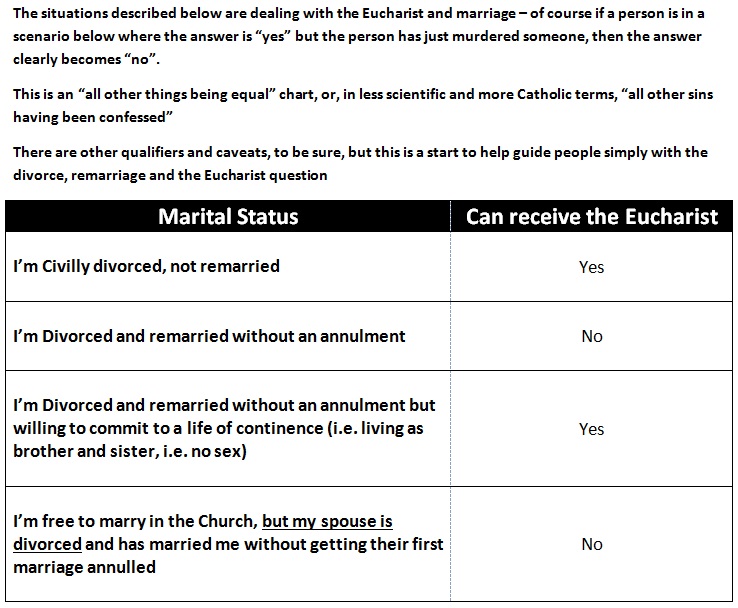
A Key Paragraph from St. John Paul II referenced several times in the most debated portions of Francis' "Amoris Laetitia"
A key passage that is referenced in the most hotly debated parts of "Amoris Laetitia" is paragraph 84 from St. John Paul II's "Familiaris Consortio"
Here's paragraph 84, which DEFINITELY warrants reading by all Catholics
84. Daily experience unfortunately shows that people who have obtained a divorce usually intend to enter into a new union, obviously not with a Catholic religious ceremony. Since this is an evil that, like the others, is affecting more and more Catholics as well, the problem must be faced with resolution and without delay. The Synod Fathers studied it expressly. The Church, which was set up to lead to salvation all people and especially the baptized, cannot abandon to their own devices those who have been previously bound by sacramental marriage and who have attempted a second marriage. The Church will therefore make untiring efforts to put at their disposal her means of salvation.
Pastors must know that, for the sake of truth, they are obliged to exercise careful discernment of situations. There is in fact a difference between those who have sincerely tried to save their first marriage and have been unjustly abandoned, and those who through their own grave fault have destroyed a canonically valid marriage. Finally, there are those who have entered into a second union for the sake of the children's upbringing, and who are sometimes subjectively certain in conscience that their previous and irreparably destroyed marriage had never been valid.
Together with the Synod, I earnestly call upon pastors and the whole community of the faithful to help the divorced, and with solicitous care to make sure that they do not consider themselves as separated from the Church, for as baptized persons they can, and indeed must, share in her life. They should be encouraged to listen to the word of God, to attend the Sacrifice of the Mass, to persevere in prayer, to contribute to works of charity and to community efforts in favor of justice, to bring up their children in the Christian faith, to cultivate the spirit and practice of penance and thus implore, day by day, God's grace. Let the Church pray for them, encourage them and show herself a merciful mother, and thus sustain them in faith and hope.
However, the Church reaffirms her practice, which is based upon Sacred Scripture, of not admitting to Eucharistic Communion divorced persons who have remarried. They are unable to be admitted thereto from the fact that their state and condition of life objectively contradict that union of love between Christ and the Church which is signified and effected by the Eucharist. Besides this, there is another special pastoral reason: if these people were admitted to the Eucharist, the faithful would be led into error and confusion regarding the Church's teaching about the indissolubility of marriage.
Reconciliation in the sacrament of Penance which would open the way to the Eucharist, can only be granted to those who, repenting of having broken the sign of the Covenant and of fidelity to Christ, are sincerely ready to undertake a way of life that is no longer in contradiction to the indissolubility of marriage. This means, in practice, that when, for serious reasons, such as for example the children's upbringing, a man and a woman cannot satisfy the obligation to separate, they "take on themselves the duty to live in complete continence, that is, by abstinence from the acts proper to married couples."[180]
Similarly, the respect due to the sacrament of Matrimony, to the couples themselves and their families, and also to the community of the faithful, forbids any pastor, for whatever reason or pretext even of a pastoral nature, to perform ceremonies of any kind for divorced people who remarry. Such ceremonies would give the impression of the celebration of a new sacramentally valid marriage, and would thus lead people into error concerning the indissolubility of a validly contracted marriage.
By acting in this way, the Church professes her own fidelity to Christ and to His truth. At the same time she shows motherly concern for these children of hers, especially those who, through no fault of their own, have been abandoned by their legitimate partner.
With firm confidence she believes that those who have rejected the Lord's command and are still living in this state will be able to obtain from God the grace of conversion and salvation, provided that they have persevered in prayer, penance and charity.
Subscribe to:
Posts (Atom)